Ongoing & New Research
Himalayan Pastoral: Colonialism, the Countryside and Life Beyond the Plantation
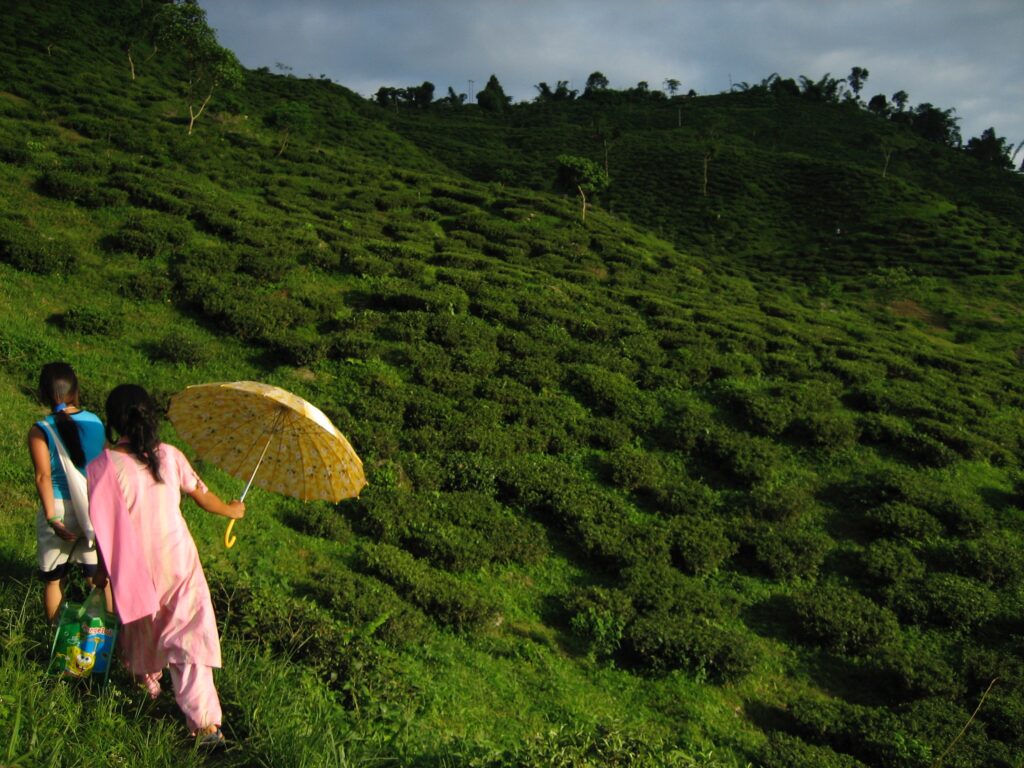
Kalimpong is a district in the eastern Himalayan foothills, adjacent to the vast tea plantation complex of Darjeeling and the Dooars. When the British annexed Kalimpong from Bhutan in 1865, they imagined the region as something different. It would be a space apart, reserved not for plantation monoculture or European settlement but for forests, cinchona production, and most importantly, “native cultivators.”
The story of Kalimpong is a story of how, alongside the plantation complex, a particular idea of the pastoral became central to the making of empire. As Raymond Williams showed in his classic work on British country estates, views of the country as bucolic, stable, and unchanging obscure the violence of extraction and accumulation. The pastoral provided a material template for the enclosure of India’s mountainous terrain, an ideological framework for governing its populations, and an aesthetic ideal. To be sure, the colonial project deepened the reach of industrial capitalism, pushing its geographical and political limits. But as the story of the annexation of Kalimpong shows, the colonial project also brought forth a new attention to industrial capitalism’s reproductive outsides—the pastoral middle-ground between factory and frontier.
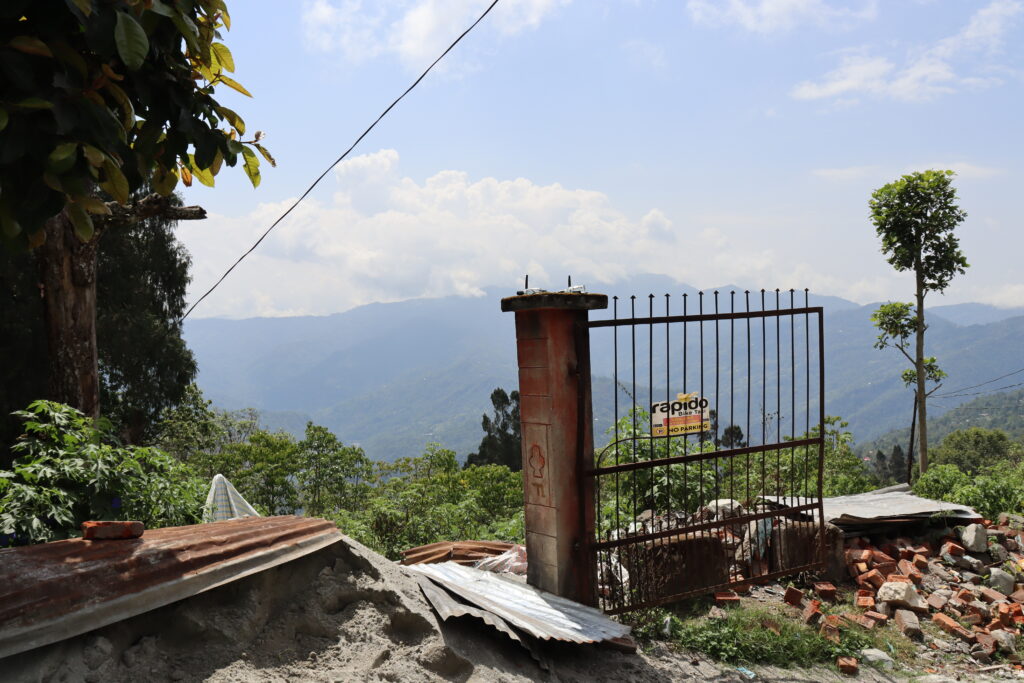
Based on detailed archival and ethnographic research, my book in progress, Himalayan Pastoral, joins a postcolonial engagement with Williams’ analysis of “the country and the city” to show how the pastoral has been revived in a time of climate anxiety. A core argument of the book is that the colonial pursuit of pastoral redemption—the attempt to construct an outside to industrial, urban, extractive economies—seeded a particular form of slow environmental violence—one that is evident on the landscape in Kalimpong today.


The Estate
While much contemporary interest in the study of labor and agriculture, including my own prior work, centers on the figure of the plantation, the plantation form emerged out of an older logic for organizing agrarian food production, housing, and social reproduction: the landed “country estate” of the English nobility. In recent years, public historians in the UK have worked to call attention to what some call the “colonial countryside”—the way in which chattel slavery, resource extraction, and militarism undergird the aesthetic and social norms now associated with the quintessentially “British” landscapes and architectural heritage preserved by entities like the National Trust. This project, along with Himalayan Pastoral, seeks to attend to what I describe as the countryside in the colonial.
In this project, I aim to develop a colonial genealogy and typology of the estate. In addition to consideration of the way that colonialism fueled the development of the countryside in colonial centers like England, it is also essential to understand how the estate, as a material form for organizing land and labor, was exported from colonial centers to possessions in India, Africa, and the Caribbean. Doing so, I suggest that while scholarly examinations of the long-term impact of the plantation have emphasized the regulation of production, a focus on the estate might broaden our perspective to capture the ways that modern economies also hinge on a regulation of reproductive labor. My suggestion is that the estate is an organizing logic for such regulation.
In order to understand that logic, the project traces four successive but overlapping forms of the estate: 1) The English country estate; 2) the colonial plantation; 3) the zamindari estates and government estates of colonial India, and 4) the urban housing estate, where generations of people from former British colonies join the descendants of English tenant farmers in low-income housing settlements that have become focal points of concern about crime and public health. Taken together these four iterations of the estate highlight the broad reaching reproductive logics of agrarian colonialism and capitalism. Pulled apart, each form illustrates how the logics of the estate are made and remade as a means of resolving problems of economic, racial, and political difference.
Arrowroot & Global Histories of Starches and Food Stabilizers
I am currently in the very early stages of a historical ethnographic project on arrowroot. The plant is most readily associated with the Caribbean, particularly the island of St. Vincent, which remains the largest producer of the crop along with India. It was a cash crop with many uses as a starch—from shirt collars to ill-digestion. The plant was introduced to India in the late 1700s, as an easy-to-digest gruel for East India Company officers. Over the next 150 years, it’s production slowly expanded across the subcontinent (and across St. Vincent in the wake of a sugar downturn), and it was taken up in regional cooking. In India, arrowroot is still used as a cheap, digestible starch, most notably in biscuits. In the Global North, the crop saw something of a resurgence in the 1980s with increased diagnoses of celiac disease.

This project’s center is in the material collections held at Kew Gardens, specifically the specimens in the Economic Botany Collection. It uses the story of arrowroot to think about the role of economic botany in colonialism outside of colonial occupations most notable plant (e.g., tea, cinchona, rubber).

Lobster, Seaweed, and the Green Economy in Maine
Today, lobster fisheries across New England are disappearing, as lobsters migrate to colder northern waters. The lobster fisheries of Connecticut, Rhode Island, and New York are now almost totally depleted. In the last dozen years, the Gulf of Maine, on the other hand, has provided a perfect lobster habitat. According to climate models, this habitat will not be viable for long. Warming waters foretell a story in which lobsters continue to move further north and eventually out of the United States altogether.
I have published two pieces associated with this project. The first in Environment and Planning E is about the relationships between the conservation of the endangered North Atlantic right whale (NARW) and the fixed gear lobster industry in Maine. The article situates the seeming battle of lobsters versus whales that puts studies of fisheries and common pool resources into conversation with the anthropology of labor and capitalism.
The second, an open access book chapter in Solarities (edited by Howe, Diamanti, and Moore), looks at an industrial alternative to Maine lobster: seaweed. Seaweed’s value has been touted in a variety of ways: a feed additive for cows to decrease methane emissions, a biofuel, a superfood, and a cornerstone of New England’s “green economy.” For advocates, seaweed is a viable alternative to lobster, as it uses much of the same infrastructure (e.g., specially outfitted boats) and labor processes (e.g., dropping ropes in the ocean and pulling them back up again). But the rise of seaweed has opened up questions about labor and property rights.